Safari in Chitwan
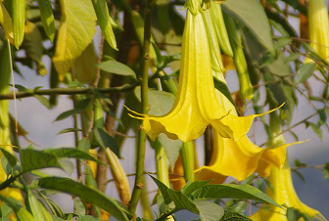
Walk through land of wild animalsIn the lowlands of Nepal spring comes with coconut palms, bananas grass and datura bloomming everywere. Days became sunny, dry and warm, with daytime tempreture goes up to 28oC at the end of February/March.
Sandip, our dear friend & safari guide, played in East Rapti and Narayani rivers from early childhood. We see in the water crocodiles so we ask him: how did you survived such companionship? He laughs. Sure we need to learn a lot. In every realm there is knowledge which helps to exist and sufvive. That wisdom is passed from generation to generation. The same here, about living with powerful wild animals:)
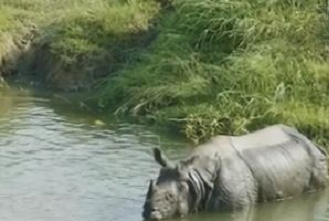
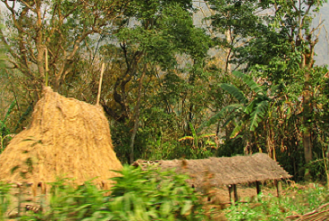
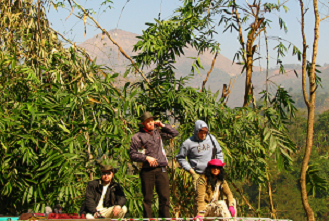
After night spend in old-type clay&straw houses we went to Chitwan Wildlife. After passing East Rapti river, which is the boarder between the land of people and the land of wild animals - we got important intruction: "when the tiger come, you do this; when the elephand appear, you do that; when bear and when rhino..." we got instruction of proper behaviour while meeting FOUR powerful owners of this land. Not in one trip, but over years of exploring wildness of Chitwan forrests, we only missed tiger in the direct meeting. We were standing with Rhino eyes to eyes for twenty minutes, which felt like forever. We were looking into bear's eyes who decided to run strait into us; we meet teenager elephant Ronaldo and his father, biggest elephand in Chitwan Wildlife area. We meet crococodiles, very rare deers, monkey and lots of flowers-like birds. We were not in jeeps, we walked there on feet. It's a waking up experience. Its not TV show, its not ZOO. Meeting here the powerful animal is real. It can change an approach to many things in life. Whenever you go for safari walk in Chitwan, ask for Sandip and his friend as guides. They not only know the place. They belong to this wild realm.
Chitwan National Park is a UNESCO world heritage site, 932 km2 of forests and grass lands with two rivers in between. Due to warm weather this place become habitat of great amound of mamals, birds, reptiles and valuable flora.
In forrests
In forrest you have chance to meet one of five hundret of One-horned Rhinoceros, few hundred endangered Royal Bengal Tiger, 370 Indian bisons called Gaur, Spotted Leopard, Wild Elephants, Blue bull, Deers, Monkeys, 45 Elephants, indian Leopards (Neofelis nebulosa), Sloth bears, Wild boars and Hyenas. Around 70 species of mammals lives there.
Birds in Chitwan
There are in Chitwan National park 450 species of birds, among others: Asian Openbill, Black-winged kite, Common Hoopoe, Cattle Egret, Asian Pied Starling, Spotted Bush Warblers, Cotton Pygmy Goose, Common Greenshank, Yellow-bellied Prinia, Grey Backed Shrike, Red Naped Ibis, Grey Wagtail, Paddy field Pipit, White Throated Kingfisher, Pavo Cristatus, Cormorants, Darter, Cinnamon Bittern, Black-crowned Night, Purple Herons, Asian Openbill, Woolly-necked and Lesser Adjutant Storks, Lesser Whistling Duck, Cotton Pygmy Goose, Balloons Ruddy-breasted and Brown Crakes, Purple Gallinule, Bronze-winged Jacana, Painted Snipe and Stork-billed Kingfisher, Chestnut-crowned and Spotted Bush Warblers, Yellow-bellied Prinia, Clamorous Reed, dusky and Smoky Warblers, Red-capped Babbler, Brown Fish Owl, Changeable Hawk-Eagle, Kalij Pheasant, Emerald Dove, Orange-breasted Green and Pompadour Green Pigeon, Moustached Parakeet, Green-billed Malkoha, Brown Hawk Owl, Crested Treeswift, Pied and Great Hornbills, Streak-throated Green, Rufous, Himalayan Golden-backed and Greater Golden-backed Woodpeckers, Large Woodshrike Rosy Minivet, Black-crested Bulbul, Golden-fronted Leafbird, Pale-chinned Flycatcher, Black-naped Monarch, Puff-throated Babbler, White-browed Scimitar-Babbler, Grey-throated Babbler, Crimson Sunbird, Thick-billed Flowerpecker, Hill Mynah, Black-hooded Oriole, White-rumped Shama, Lesser Necklaced, Greater Necklaced and Rufous-necked Laughing-thrushes, Nepal Fulvetta, Streaked Spiderhunter, yellow-bellied Warbler, Rufous-bellied Eagle, Forest Eagle, Tawny Fish Owls, Red-headed Trogon, White-browed Piculet, Great Slaty Woodpecker, Long-tailed Broadbill, Ruby-cheeked Sunbird and Little Spiderhunter.
In Rivers
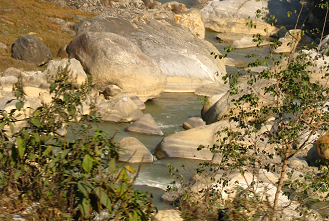
In East Rapti and Narayani rivers you can meet Gangetic dolphins! They are rare, lives only in rivers (no oceans).
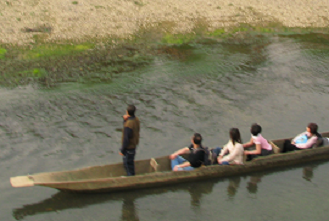
Another habitants in local rivers are crocodiles, usualy sunbathing at middays on the banks. First it is the impression that they are fake, as they lay without any movement on beaches. We were doing bets for their apperance to be fake. Then they move. Then you remember to keep your finger out of water, as guides recomended, while passing them in old wooden canoes:)
Gharial Crocodile (Gavialis gangeticus) & Mugger Crocodile, listed as a endangered specie in the IUCN Red List. Both types of crocodiles live along rivers in Chitwan,Shuklaphanta, Bardia, Koshi Tappu.
Tharu culture
Tharu people are truly respecting nature. For centuries they lived in farmony with nature forces. The Guruwa, local spiritual guides, perform ancient rituals for living and dead. They celebrate Maaghi - the first day of the Magha (Jan/Feb) eleventh month from thirteen lunal months of Vicram Samvat callendar. It is a celebration of life winning over death, warm and light over coldness of winter and darkness. People pray to Agni Devta, fire deity; taking bath in springs and rivers for cleansing. Part of celebration are meals with sesame seeds, fish, meat and rice. Tharu people talk in their own tharu language. They traditionally were living in forest, therefore having great skills for survival. They were and are great hunters and fishermen. Local people also made complex system of irrigation providing far villages with water for planting and cultivating their food. They grow rice, mustard, bananas, papayas, sezame and hemp for clothes making. Their clothes were not dyed, just of natural hemp, but would decorate themselfs with colorful neclesses and birds feaders. Traditionally Tharus were living in clay houses covered with grass. They enjoyed making artictic painting of the walls of their houses. Tharu people enjoyed living closely together. They had respected Badhghar leaders, who would make important decissions for community and also show by himself to do hard work.
Mustard growing
The Chitwan soil rich in sulfur and nitrogen make grow of some plans very well. Among others like wild cannabis, there is lots of mustard growth. From mustard seeds is produced an oil, great for dull skin. According ajurvedic medicine mustard seeds oil have antibacterial, antifungal properties, can reduceds inflamation, boosts appetite and simulate.
Activities in Chitwan
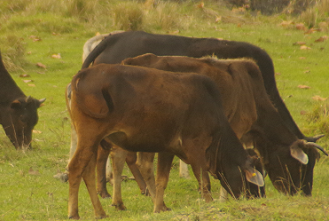
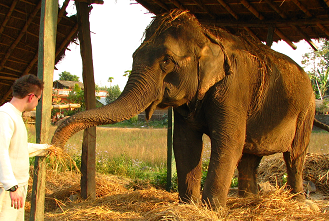
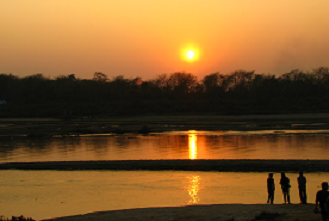
You can walk through Tharu village to appreciate the old ways of living - how little of material posessions people could have and live in communities happy. In Chitwan you can do by walk or by jeep a safari trip; there is a high chance to meet closely with elephants, rhinos, buffalos, monkeys, deers and tigers. There is another option - to do ride on elephant, which we do not recomend as way to respect those great beings, but it is ok to bath with elephants and visit to Elephant Breeding Center. At early morning is best time to watch and listen to music of local crazy colorful birds while watching sunrise near the rivers. For evening is time to meet Tharu village's artists for their inscenisation of folklor dances, as well to join them:). The nights in Chitwan are best time to try tharu food and have great time with local people, who knows how to enjoy life, as they have grown in the communities, not in front of TV.
Look in Chitwan for Sandip and his friend for guiding. They are part of the wildness:)
Namaste!
Back to Blog